 Cost guide · Updated July 2026
 Emergency Tree Removal Cost
Why emergency work costs 2–3× more
- After-hours mobilization: night, weekend, and holiday work adds 30–100% over standard rates before the job itself is priced.
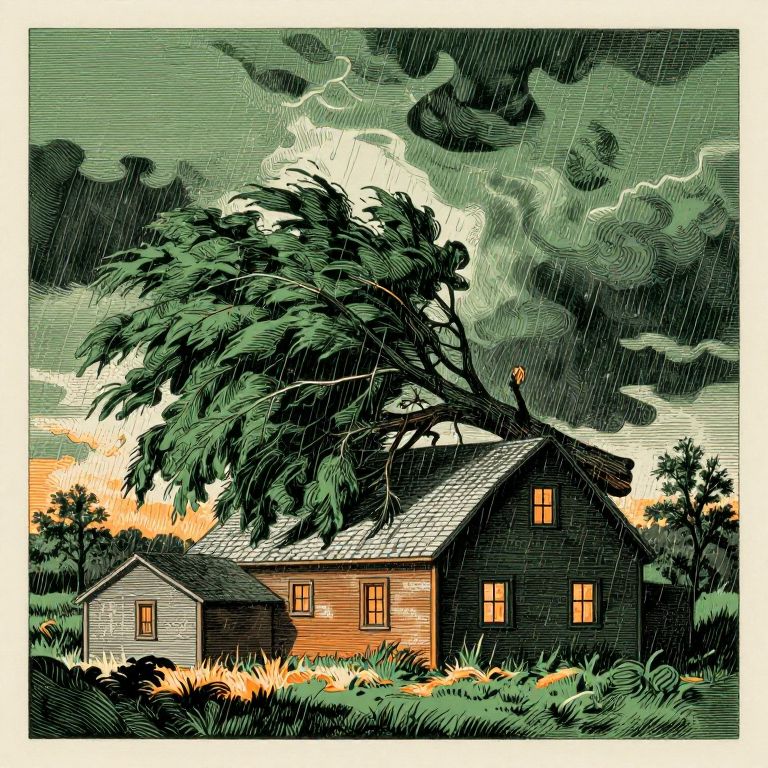
- Hazardous conditions: a tree resting on a roof is under tension — cutting it wrong injures people and worsens damage. This is slow, specialist rigging or crane work.
- Storm demand: after a major storm, every crew within 100 miles is booked. Prices reflect it.
Typical emergency scenarios
| Scenario | Typical cost |
|---|---|
| Large limb down, blocking driveway | $300 – $800 |
| Whole tree down in yard, urgent haul-off | $800 – $1,600 |
| Tree on roof or garage (crane work) | $1,500 – $5,000+ |
| Hazard tree leaning after storm, pre-emptive removal | $1,000 – $2,500 |
The insurance playbook (do this in order)
- Photograph everything before anything is moved — the tree, the damage, wide shots and close-ups.
- Call your insurer and open a claim before authorizing non-urgent work; they may require their adjuster to see it.
- Authorize only make-safe work first (tarping, removing the tree from the structure) — keep the receipt separate.
- Get the removal quote in writing and confirm what the policy caps removal at (commonly $500–$1,000).
- Keep every receipt, including tarps and hotel nights if the house is unsafe — often reimbursable.
Emergency removal FAQ
How much does emergency tree removal cost?
Emergency tree removal typically costs $500–$5,000, roughly 1.5–3 times normal rates (extreme post-storm cases reach 4×). After-hours callouts add 30–100%, post-storm demand adds 50–100%, and trees on structures command the biggest premiums because crews work in hazardous, time-critical conditions.
Does insurance pay for emergency tree removal?
If the tree fell on a covered structure — house, garage, deck, fence — homeowners insurance usually covers removal from the structure and repairs, minus your deductible. Most policies cap removal of the tree itself at $500–$1,000. A tree that falls in the yard without hitting anything is generally not covered.
Who is responsible if a neighbor's tree falls on my property?
In most states, your own insurance handles it regardless of whose tree it was — unless you can show the neighbor knew the tree was hazardous (a documented dead tree, prior written warnings). Photograph everything and notify both insurers.
How do I avoid storm-chaser scams?
Be wary of door-knockers after a storm demanding cash up front. Verify insurance certificates directly with the insurer, get the price in writing before work starts, and never pay in full before the job is done. Legitimate crews are busy after storms — anyone with instant availability and a cash discount is a red flag.