 Guide · Updated July 2026
 DIY Tree Removal: When It's Safe — and When It Isn't
The DIY decision checklist
All six must be true. One "no" means hire it out:
- Tree is under ~20 ft tall with a trunk under ~10 inches.
- Clear falling room in every direction — at least 1.5× the tree's height.
- No structures, fences, vehicles, or lines anywhere in range.
- Tree is alive, upright, not leaning significantly, and not under tension.
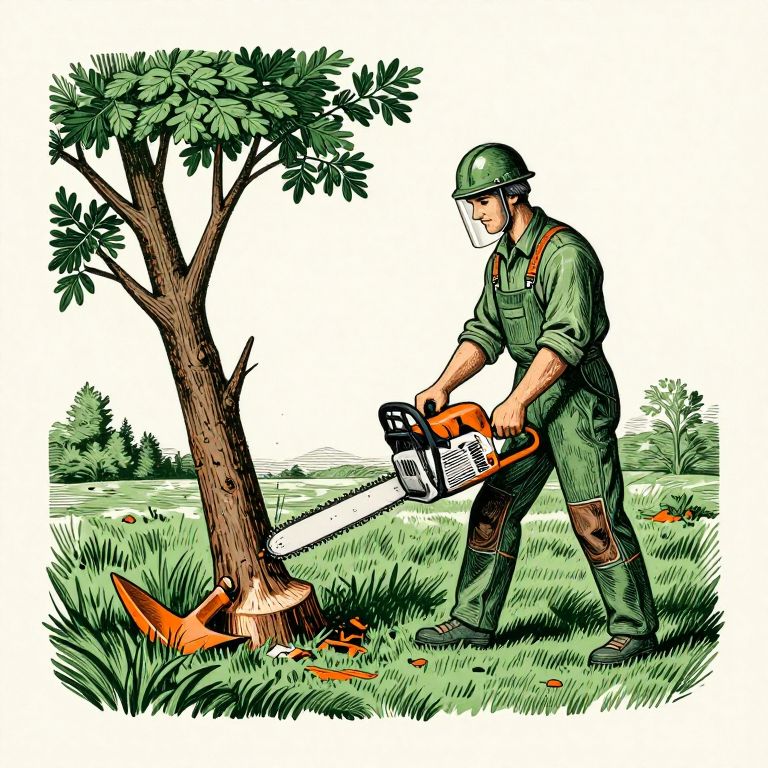
- You own or will rent real protective equipment: helmet with face shield, cut-resistant chaps, gloves, boots.
- Someone else is present, at a safe distance, while you cut.
What DIY actually costs
| Item | Cost |
|---|---|
| Chainsaw rental (day) | $50 – $90 |
| Protective equipment (if you own none) | $80 – $200 |
| Felling wedges, rope | $40 – $80 |
| Debris disposal (dump fees or curbside) | $50 – $150 |
| Total, one small tree | $150 – $400 |
| Hiring the same job out | $150 – $500 |
Read that table twice: for a single small tree, DIY often saves less than $200. The jobs where DIY would save real money — big trees — are exactly the ones that aren't DIY-able.
The three killers
- Barber chair: the trunk splits vertically during the fall and the butt kicks up and back through where you're standing. Caused by bad face cuts on leaning trees.
- Widow-makers: dead limbs overhead that vibration shakes loose. They're why helmets are non-negotiable and dead trees are pro work, period.
- Tension wood: anything bent or pinned — a leaning trunk, a fallen tree resting on something — stores spring energy that releases explosively when cut.
Sensible middle ground
Have a pro do the felling and major bucking, then finish the cleanup yourself: limb the downed trunk, cut firewood lengths, chip or haul brush. You save the haul-away and cleanup charges ($100–$300) while the dangerous work stays insured. Ask for "fell and leave" pricing — most crews offer it.
DIY removal FAQ
Can I remove a tree myself to save money?
Only for small, open-ground trees: under about 20 feet tall, trunk under 10 inches, with room for it to fall in any direction and nothing it can hit. That job costs $150–$500 hired out and roughly $100–$300 in rented gear DIY — modest savings for real risk. Anything taller, near structures, or requiring climbing belongs with an insured pro.
How much does DIY tree removal actually cost?
Chainsaw rental $50–$90/day (or $200–$600 to buy), protective equipment $80–$200 if you own none (helmet with face shield, chaps, gloves, boots), wedges and rope $40–$80, plus debris disposal $50–$150. For one small tree you'll spend $150–$400 — often close to the professional price once you count disposal.
What is the most dangerous part of felling a tree?
The unpredictable ones: barber chair (the trunk splits vertically mid-fall and kicks back), widow-makers (dead limbs dropping from above), and incorrect hinge cuts sending the tree backward. Chainsaw injuries send roughly 36,000 Americans to the emergency room each year, and OSHA data shows struck-by-tree incidents are a leading killer in tree work — with untrained users doing storm cleanup heavily represented.
Why won't my homeowners insurance cover DIY tree damage?
If your DIY felling drops a tree on your own house, most policies treat it as negligence rather than a covered peril and can deny or fight the claim — and if it lands on a neighbor's property, you're personally liable. A pro's liability insurance exists precisely for this.